
Tech
NO, Bill Gate is NOT Buying $645 Million Luxury Yacht That Runs On Hydrogen


James Hobson, a Canadian engineer and YouTuber based has created a filly functional lightsaber using plasma that can melt through metal. Hobson is known to his YouTube fans as “The Hacksmith” and he has accomplished incredible engineering feats in the past.
In a new video for Hacksmith Industries’ “Make It Real” series, Hobson shows how he was able to create the device. The video has already gathered over 12 million views. The lightsaber is attached to a portable backpack connected to a hilt that pumps out a constant stream of propane gas which. Once the gas is mixed with oxygen, it creates a beam of plasma that looks very similar to the lightsabers from the Star Wars franchise. The device burns at over 4,000 degrees Fahrenheit, which means that it can cut right through thick pieces of metal and steel.
In his video, Hobson also demonstrated how the color of the lightsaber can be changed by adding different salts to the mixture. For example, boric acid can make the beam green, while sodium chloride, more commonly known as table salt can turn it yellow. Calcium chloride will produce an amber color, while strontium chloride will turn the beam red.
“Even with all of our new equipment and capabilities, we’re still bound by the laws of thermodynamics. Well, theories say that plasma is best held in a beam by a magnetic field, which, scientifically, checks out. The issue is producing a strong enough electromagnetic field to contain a blade, well the lightsaber would have to be quite literally built inside a box coated in electromagnets, which turns it into a kind of useless science project,” Hobson explained in his video.
The device was incredibly expensive to make, the laminar nozzle alone cost about $4,000.
The lightsaber first appeared in the original Star Wars film and has since appeared in every Star Wars movie, with at least one lightsaber duel occurring in each main film installment. In 2008, a survey of approximately 2,000 film fans found it to be the most popular weapon in film history.
For the original Star Wars film, the film prop hilts were constructed by John Stears from old Graflex press camera flash battery packs and other pieces of hardware. The full sized sword props were designed to appear ignited onscreen, by later creating an “in-camera” glowing effect in post-production. The blade is a three-sided rod which was coated with a Scotchlite retroreflector array, the same type that is used for highway signs. A lamp was positioned to the side of the taking camera and reflected towards the subject through 45-degree angled glass so that the sword would appear to glow from the camera’s point of view.

(David McNew/Getty Images)
Animator Nelson Shin, who was working for DePatie–Freleng Enterprises at the time, was asked by his manager if he could animate the lightsaber in the live-action scenes of a film. After Shin accepted the assignment, the live-action footage was given to him. He drew the lightsabers with a rotoscope, an animation which was superimposed onto the footage of the physical lightsaber blade prop. Shin explained to the people from Lucasfilm that since a lightsaber is made of light, the sword should look “a little shaky” like a fluorescent tube. He suggested inserting one frame that was much lighter than the others while printing the film on an optical printer, making the light seem to vibrate.

For ultra-wealthy parents, Bugatti and the Little Car Company of London are joining forced to design a limited edition miniature electric Buggati for kids. There will only be a total of 500 of these vehicles made, and initially, they were all sold out after the car was unveiled at the 2019 Geneva Motor Show. However, many of the purchasers went back on their agreements as a result of the coronavirus pandemic and resulting economic crisis, which means there are a few models available for those who had a lot of stock in tech companies and saw their wealth increase during the pandemic.
The all-electric miniature car is surprisingly cheap, for a Bugatti anyway. The vehicle is called the Bugatti Baby II and it starts at about $35,000.
The car is intended to be a modern interpretation of the original Bugatti Baby, which was created back in 1926 for Ettore Bugatti’s youngest son. Originally, this was just supposed to be a small project for his son, but as soon as his customers found out about it they wanted one too, so the company made 500 more and sold them all. Of course, there are a few differences between the new model and the one that was designed nearly 100 years ago, aside from the electric engine.


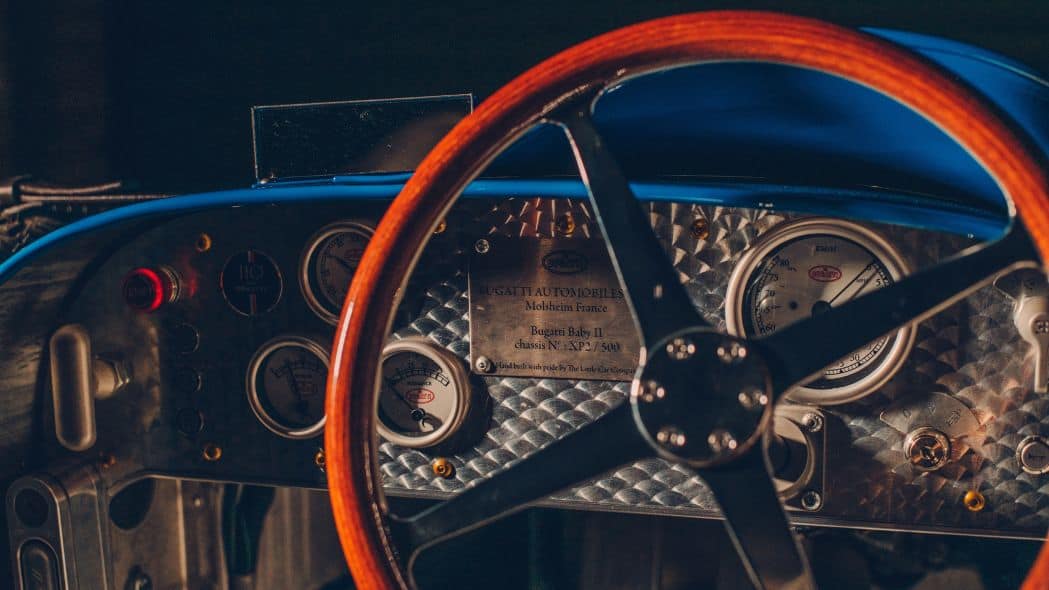



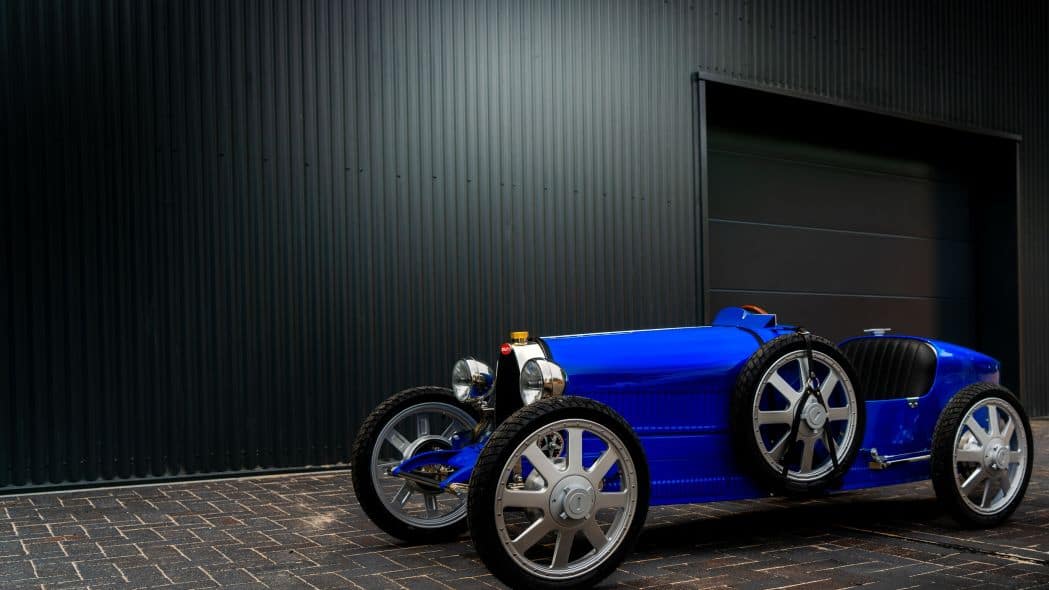

The new model is a bit larger, and comes in three versions that are each a different power and speed. Some of the models can only go 12 mph, while another can go 30 mph, and the best model can go a bit faster. However, the faster and upgraded versions are also more expensive, and can cost between $50,000 and $68,000. They also come with a speed key, which unlocks the car’s full performance potential.
Bugatti test driver Andy Wallace, the same man who drove a Bugatti Chiron over 300 miles an hour on a test track, helped develop the suspension settings for the Bugatti Baby II.
“In its most powerful mode, when you have the ‘Speed Key’ inserted, the Baby II is a very fast car. It’s quite impressive and brilliantly fun,” Wallace said in a statement.
Introducing the Baby II | Chapter 6
The BUGATTI Type 35 is generally acknowledged as the most successful racing car of all time, bringing the brand to unexcelled fame in the 1920s. In 1926, Ettore and his son Jean decided to build a half-scale Type 35 for Ettore’s youngest son, Roland, on the occasion of his fourth birthday, with which he soon raced against other children. The elaborate BUGATTI Baby II is a modern tribute to Ettore’s masterpiece, in three-quarter scale and powered by an electric powertrain, for kids to feel what racing in the roaring twenties was like.
Posted by Bugatti on Wednesday, March 25, 2020
As Anonymous News reported earlier this year, the company has recently rolled out what will likely be one of the most expensive cars in the world, but right now it is only seen rarely, at expensive car shows, or the streets of Italy during the Concorso d’Eleganza Villa d’Este.
The Bugatti La Voiture Noire is a one of a kind vehicle that is priced around £14 million. The car is considered to be the “spiritual successor” to Jean Bugatti’s personal Type 57 SC Atlantic that was reportedly lost during World War II.
Automobiles Ettore Bugatti was a French car manufacturer of high-performance automobiles, founded in 1909 in the then-German city of Molsheim, Alsace by the Italian-born industrial designer Ettore Bugatti. The cars were known for their design beauty and for their many race victories. Famous Bugattis include the Type 35 Grand Prix cars, the Type 41 “Royale”, the Type 57 “Atlantic” and the Type 55 sports car.
All Photos Courtesy of Bugatti and Auto Blog.
-

 News1 year ago
Alabama Passes Law to Chemically Castrate Pedophiles
-

 News2 months ago
Pedophiles Panic As New Epstein Flight Logs Set To Be Revealed
-

 Tech9 months ago
The New Bugatti La Voiture Noire Is Worth £14 Million
-

 News10 months ago
Iranian Presidential Adviser Posted A List Showing Locations For All Trump’s Properties
-

 Anonymous1 year ago
Anonymous Message to the People of Hong Kong
-

 In case you missed it3 weeks ago
NASA Chief Warns That Humans Must Prepare For A Massive Meteor Strike
-

 Tech5 months ago
DeLorean Confirms Plan To Redesign and Produce A New Line Of DMC 12S Cars
-

 News5 months ago
Man Used Internet Registry to Track down and Beat up Pedophiles
-

 Anonymous8 months ago
Anonymous Warns Citizens Of The World About Coming Global Lockdown
-

 News1 year ago
Leonardo-backed fund Pledges $5 Million To Preserve Amazon Rainforest
-

 Politics1 year ago
Ilhan Omar’s Arrest Record And Corruption Charges Revealed
-

 In case you missed it1 month ago
Bankrupt Mother Jumps Off Bridge With Her Son After They Lost Their Home
-

 Nature4 months ago
No More Coffins, Organic Burial Pods Will Turn Bodies Into Trees
-

 Anonymous8 months ago
Anonymous Predicts What Coronavirus Will Bring In The Coming Months
-

 News2 months ago
China Releases New Frightening Video Showing Attack On U.S. Guam Military Base
-

 News6 months ago
New Surveillance Footage Shows George Floyd Was Not Resisting Arrest
-
 In case you missed it1 month ago
Father Shoots Man Who Kidnapped & Raped His Son, On National TV
-

 Anonymous1 year ago
Anonymous Message To Greta Thunberg
-

 News2 months ago
Chinese State Media: “If U.S. Troops Return To Taiwan, China Will Start A War”
-
 News3 months ago
Military Base Where Soldiers Have Been Murdered Get’s Caught Up In Child Trafficking Sting